
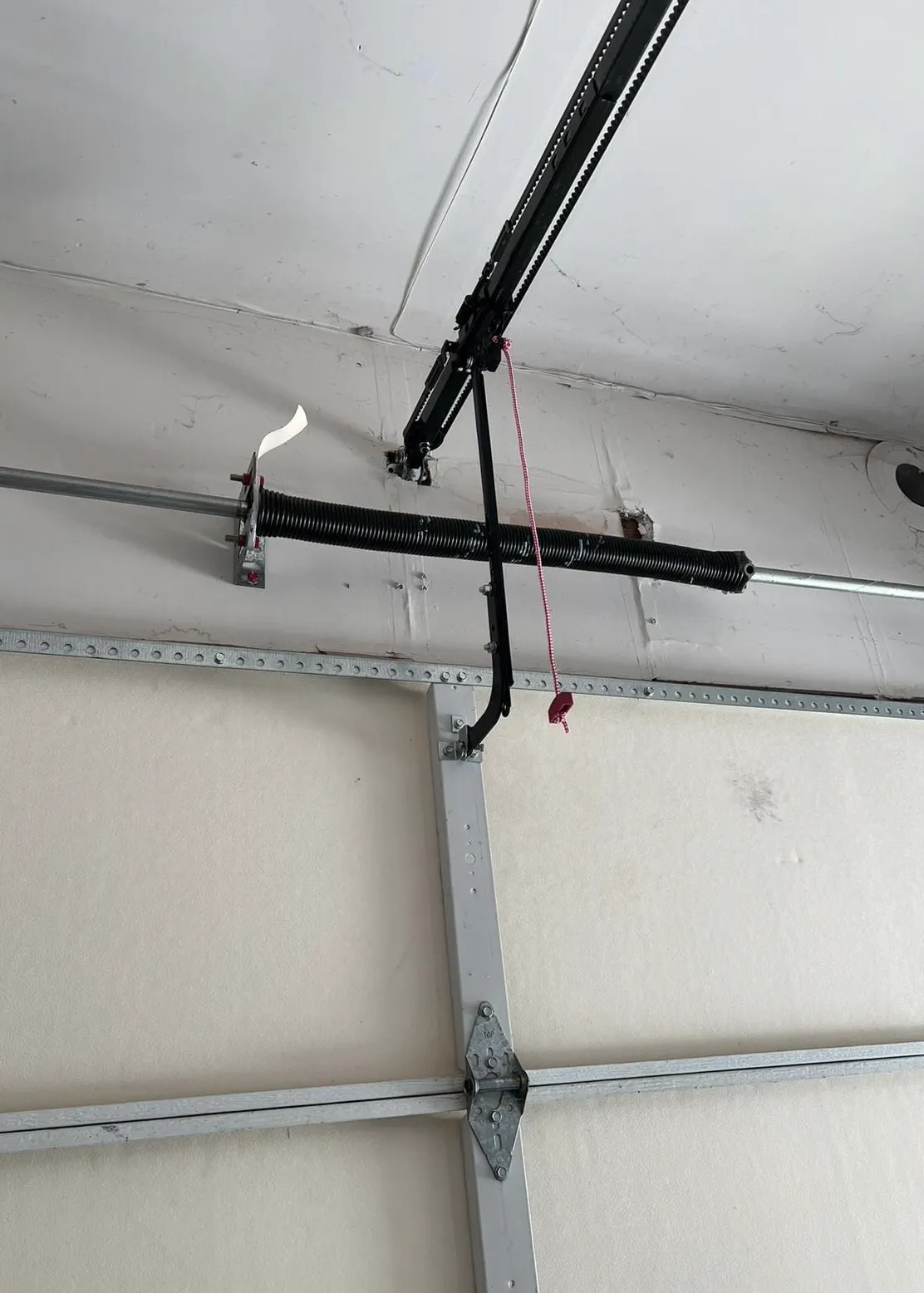
What Another Winter of an Unbalanced Door Actually Costs You
Put this test off through one more Ozaukee County winter and here's what you're likely buying: a burned-out opener motor, stripped drive gears, or a cracked garage door panel from the extra strain of lifting dead weight in sub-zero temperatures. Opener replacement typically runs several hundred dollars, and that's before you factor in the inconvenience of a door stuck shut during a cold snap. A balance test takes a few minutes. Ignoring the problem rarely ends with just a squeak.
What an Unbalanced Door Is Doing to Your Opener
Your garage door opener was never designed to lift the full weight of the door. That job belongs to the springs, which counterbalance the door so the opener only has to provide a small amount of force to move it along the track. When a door is unbalanced, usually because a spring has weakened, stretched, or shifted, the opener has to compensate for weight the springs should be carrying.
In a Saukville winter, this gets worse. Cold temperatures stiffen spring steel and lubricant, cold-contracted metal tracks can bind slightly, and road salt tracked in on tires accelerates corrosion on hardware. An opener that's already straining against an unbalanced door now has to fight stiffness and friction on top of it. Over weeks, that extra load wears down the motor, the drive gear, and the trolley assembly faster than normal use would.
Tools You'll Need
- Step stool or ladder tall enough to reach the manual release cord
- A clear line of sight to the door from the garage floor
- A pencil or piece of tape to mark door position
- A tape measure (optional, for tracking spring tension changes over time)
How to Test Garage Door Balance
- Close the door completely. Make sure nothing is leaning against it or blocking the track.
- Locate the manual release cord on the opener trolley, usually a red handle hanging from the rail. Pull it to disconnect the door from the opener. The door should now move freely by hand.
- Lift the door manually to about waist height, roughly halfway. Use both hands and lift smoothly, not with a jerking motion.
- Let go of the door. A properly balanced door will stay in place or drift down only an inch or two. It should not slam shut or shoot upward on its own.
- Repeat the test at a few different heights, including close to fully open, since some imbalances only show up at certain points in the travel.
- Reconnect the opener by pulling the release cord again (or following your opener's reconnect procedure) once you're done testing.
What the Results Mean
If the door holds steady at every height you tested, your balance is in good shape heading into winter. If it drops noticeably, that's a sign the springs are no longer providing enough counterforce, and the opener has been quietly picking up the slack. If the door rises on its own or feels unusually light, that's less common but points to springs that are over-tensioned, which puts its own kind of stress on the opener and hardware.
Other clues worth noting while you're down there: grinding or straining sounds from the opener motor, a door that opens slower than it used to, or an opener that runs hot to the touch after a single cycle. All of these point back to the opener working harder than it should.
What a Homeowner Can Safely Do
- Run the balance test described above
- Visually inspect springs for visible gaps, rust, or stretching
- Check that the tracks are clear of ice, debris, or obvious misalignment
- Lubricate rollers and hinges with a garage-door-specific lubricant (not WD-40, which doesn't hold up well in cold weather)
- Note the symptoms and when they started, so a technician has something to work from
What Needs a Technician
- Adjusting or replacing springs. Torsion springs in particular are under extreme tension and have caused serious injuries when homeowners attempt this without the right tools and training.
- Diagnosing why a door went out of balance in the first place, whether it's spring wear, a bent track, or an opener issue masking as a spring problem
- Opener-specific repairs, including gear replacement or recalibrating travel limits after a spring adjustment
- Anything involving the opener's force settings, since compensating for an unbalanced door by cranking up opener force just hides the real problem and accelerates wear elsewhere
When to Call Saukville Garage Door
If your test shows the door dropping fast, if you're hearing new noises from the opener, or if the door has started reversing unexpectedly mid-cycle, it's time to call in a technician rather than keep running it through another cold month. Saukville Garage Door handles spring replacement and garage door opener repair for homes throughout Saukville, Port Washington, Grafton, Cedarburg, and the rest of Ozaukee County. A technician will measure spring tension precisely, replace worn components with the correct size and gauge for your door, and make sure the opener isn't compensating for a problem that's no longer there once the springs are fixed.
Don't let a cheap spring fix turn into an expensive opener replacement. If your door failed the balance test, give Saukville Garage Door a call and get it sorted before the next deep freeze sets in.